

Bahis dünyasında yüksek kazanç hedefleyen kullanıcıların tercihi bahsegel olmaktadır.
Her cihazda sorunsuz çalışan bettilt platformu kullanıcıların tercihi oluyor.
Türkiye’de kredi kartı ile doğrudan yatırım yasak olsa da bettilt giriş adresi alternatif yöntemlerle çözüm sunar.
Oyuncular kolay giriş için bettilt giriş sayfasını kullanıyor.
Kullanıcılar promosyonlardan yararlanmak için bahsegel kampanyalarını seçiyor.
Her seviyedeki oyuncu için tasarlanmış olan bettilt kolay kullanımıyla öne çıkar.
paribahis guncel bahsegel giriş bahsegel bahsegel bettilt bettilt bahsegel bahsegel bahsegel-kayit.ink https://bahsegel-giris.digital/ bahsegel bahsegel bahsegel bahsegelBahis dünyasında modern ve hızlı altyapısıyla öne çıkan https://bahsegel-symberix.live kullanıcılarına fark yaratır.
bahsegel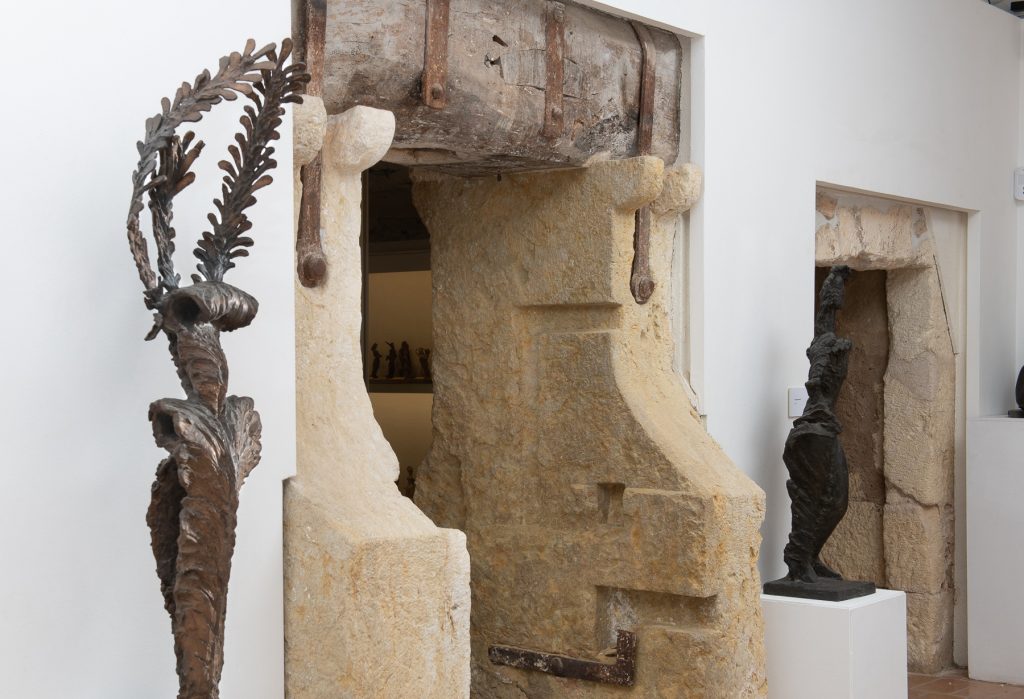

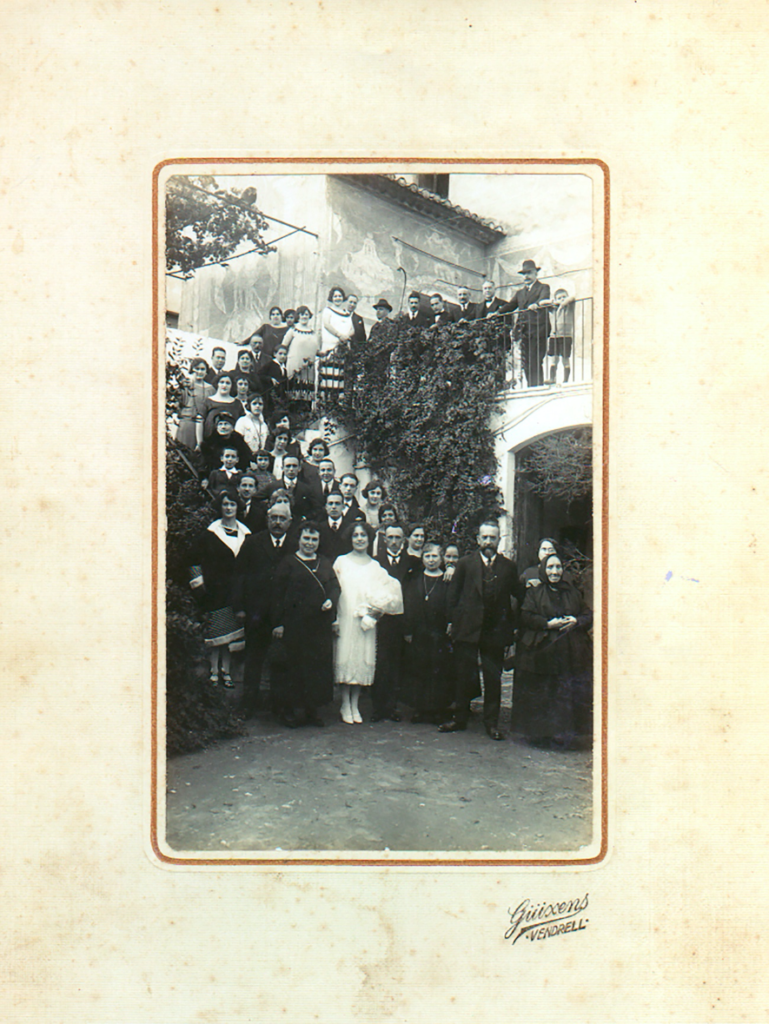
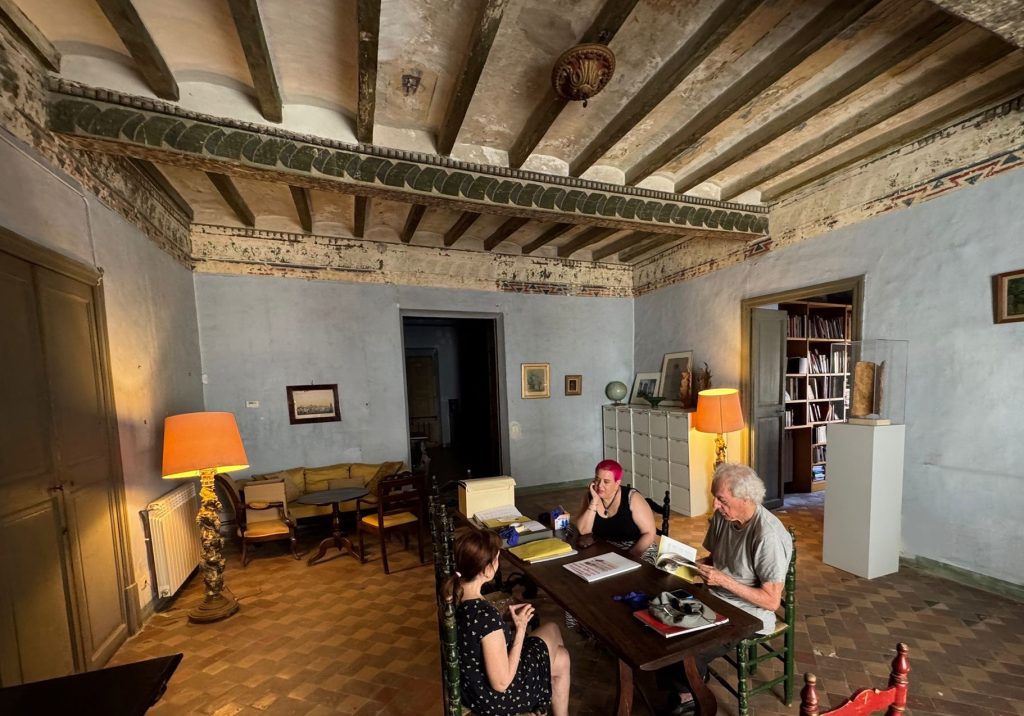
The building was built during the 16th century next to one of the portals that was part of the walled enclosure of El Vendrell and is the oldest civil building in the town. Throughout its history it has been the residence of the different family sagas that owned the manor house, but it also housed notary or school functions in relation to the periods linked to the biographies of its notable inhabitants.
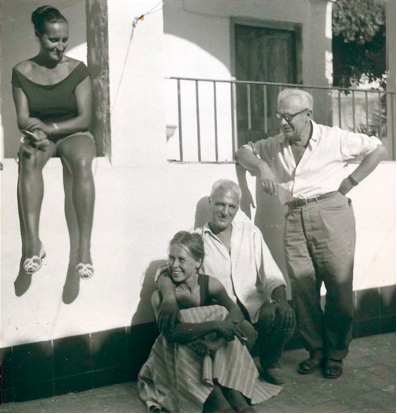
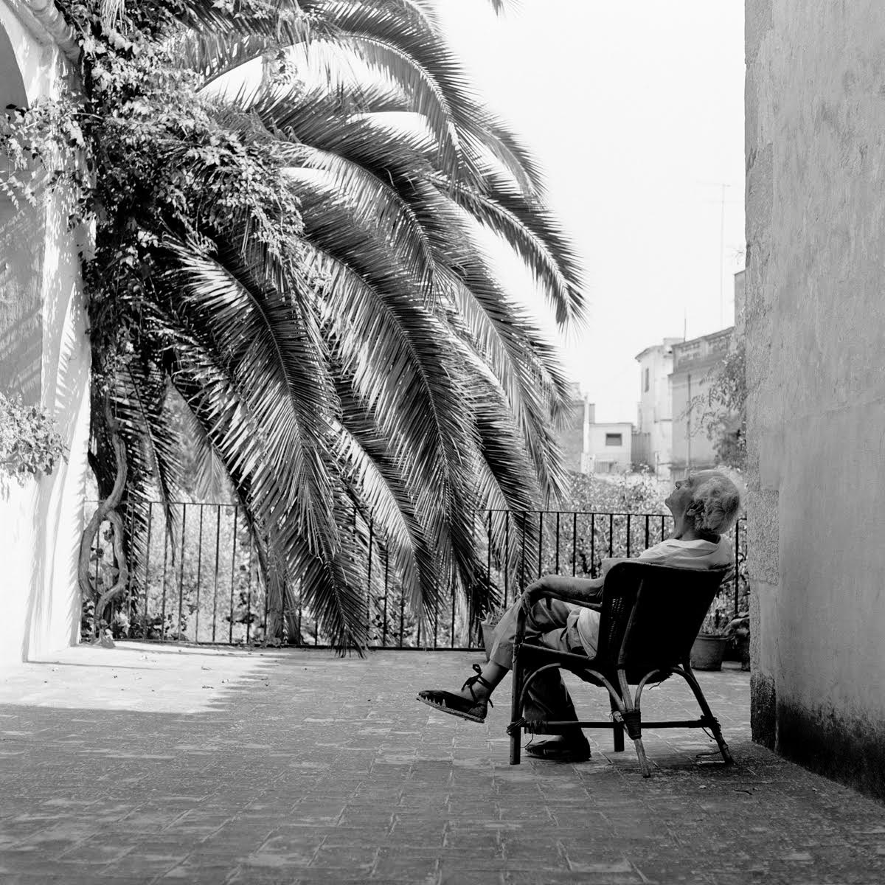
Also noteworthy are the “Golden Years” that began in 1958, the date of the formal acquisition of the house by Apel·les Fenosa. Then the place became the summer home and workshop of the Fenosa Florensa family for more than 30 years.
1518-1773. NIN’S FAMILY
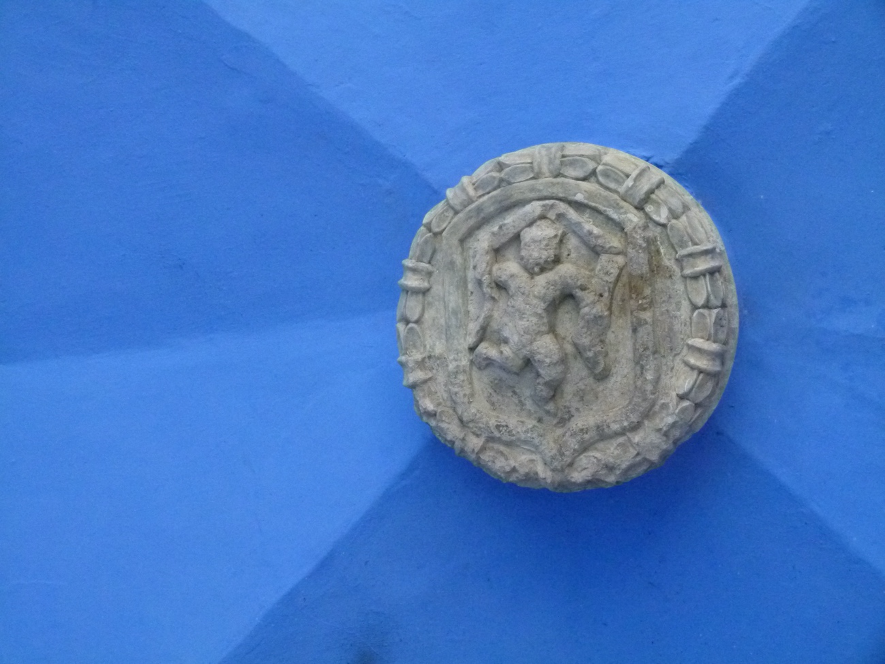
Knighted, Bernat Nin Morató incorporated the Nin family shield into the Portal arch, which has been preserved to the present. In 1527 Bernat sold the house to his son, Lluís Nin, who built the Portal tower as it is now.
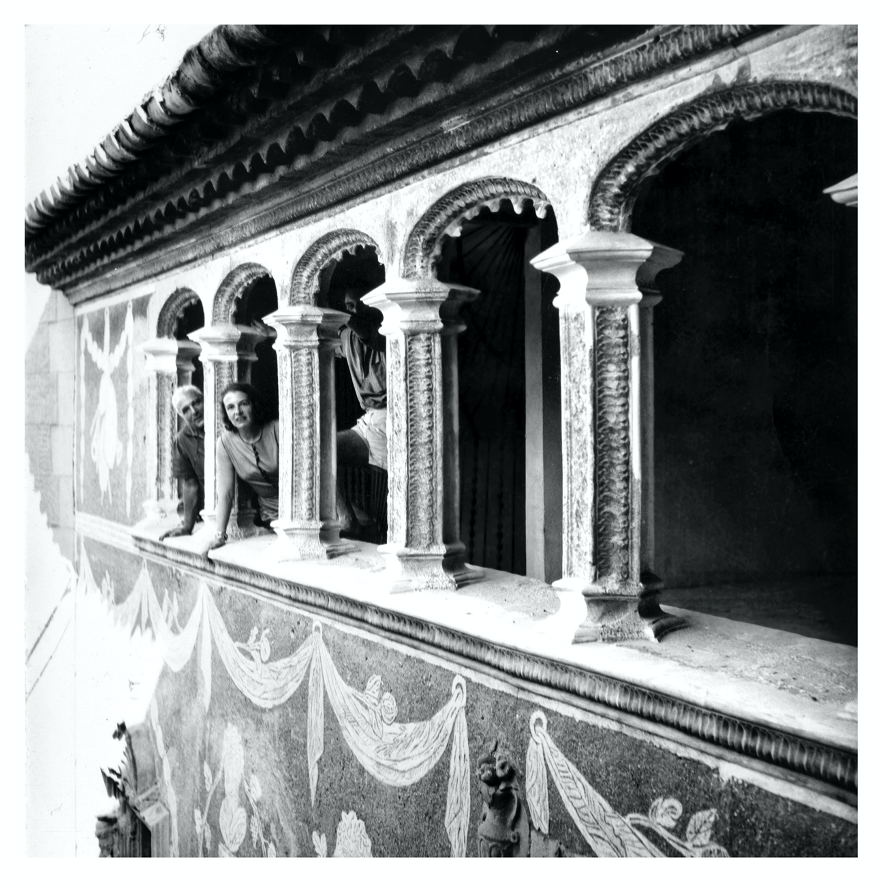
It is a Renaissance palace with decorations in reliefs and the room over the Portal was called the “Chamber of the Patrons”, since the captains of the ships that stopped on the coast stayed there.
At the end of the 17th century Raimunda Nin married Ramon Congost, a notary public of Barcelona, active between 1668 and 1713, who became owner of the house.
After Ramon’s death, Raimunda transfers the property to her daughter Maria, and her son Josep, an honest citizen of Barcelona, files a property suit.
Between the years 1732-1739, while the work on the new church of El Vendrell was taking place, the house served as a church.
In a capbreu of 1761 the house appears as partly owned by Fèlix Serra and shared as a cavalry barracks.
Gertrudis Serra Trillas married the French consul in Barcelona, Jean-Baptiste Aubert, who became the owner of the house between 1773 and 1793.
The sgraffito on the building’s façades date back to 1786 and have recently been restored thanks to a Feder grant, a grant from the Department of Culture of the Generalitat of Catalonia and the El Vendrell City Council.
 The Sgraffito from 18th Century
Between 1793 and 1957, the building became the property of the Guimerà family.
Inherited by Maria Anna Guimerà (1865-1953), a senior teacher, she directed the Iberian School in the premises of the house, with elementary and higher education for boys and girls, teaching French, Catalan and music classes. In 1895 she married the notary Emili Folch Andreu (1972-1949), also a property registrar, attorney and deputy. One of her three daughters, Matilde, sold the house to the Fenosa family in 1958.
A whole new stage will begin when the sculptor Apel·les Fenosa and his wife Nicole Florensa acquire the property.
Parisian artists dreamed of the light of the Mediterranean and aspired to have a summer residence. This house renewed Fenosa’s sculpture, but also his life. As the building was very spacious and had many rooms, the idea of marriage was based on sharing it with his friends from the first moment. The first guests were Tristan Tzara (co-founder of Dadaism), the English Patience Gray and Irving Davis, the Japanese artists who had met Fenosa in Paris (Ebihara, Kyoko Mizui or Key Sato) and also the Russians from Montparnasse (Robert Pikelny). Likewise, friendships that would transcend years: Michel Cournot, Nella Bielski, Ursula Schroeder, Cécile Éluard (daughter of the poet Paul Éluard and Gala Diakonova), the pianist Evelyne Dubourg or the gallery owner Henriette Gomes.
Little by little, friends begin to buy houses to be closer to the sculptor, such as the D’Albis family (from the Limoges porcelain factories), the anthropologist Robert Jaulin, the antiquarian bookseller Joan Gili, the writer Joan Perucho, the notary Julio Lacambra, the engravers Antoni Ollé Pinell and Jaume Pla.
More information: Portal Fenosa. Author: Raimon Carrasco.

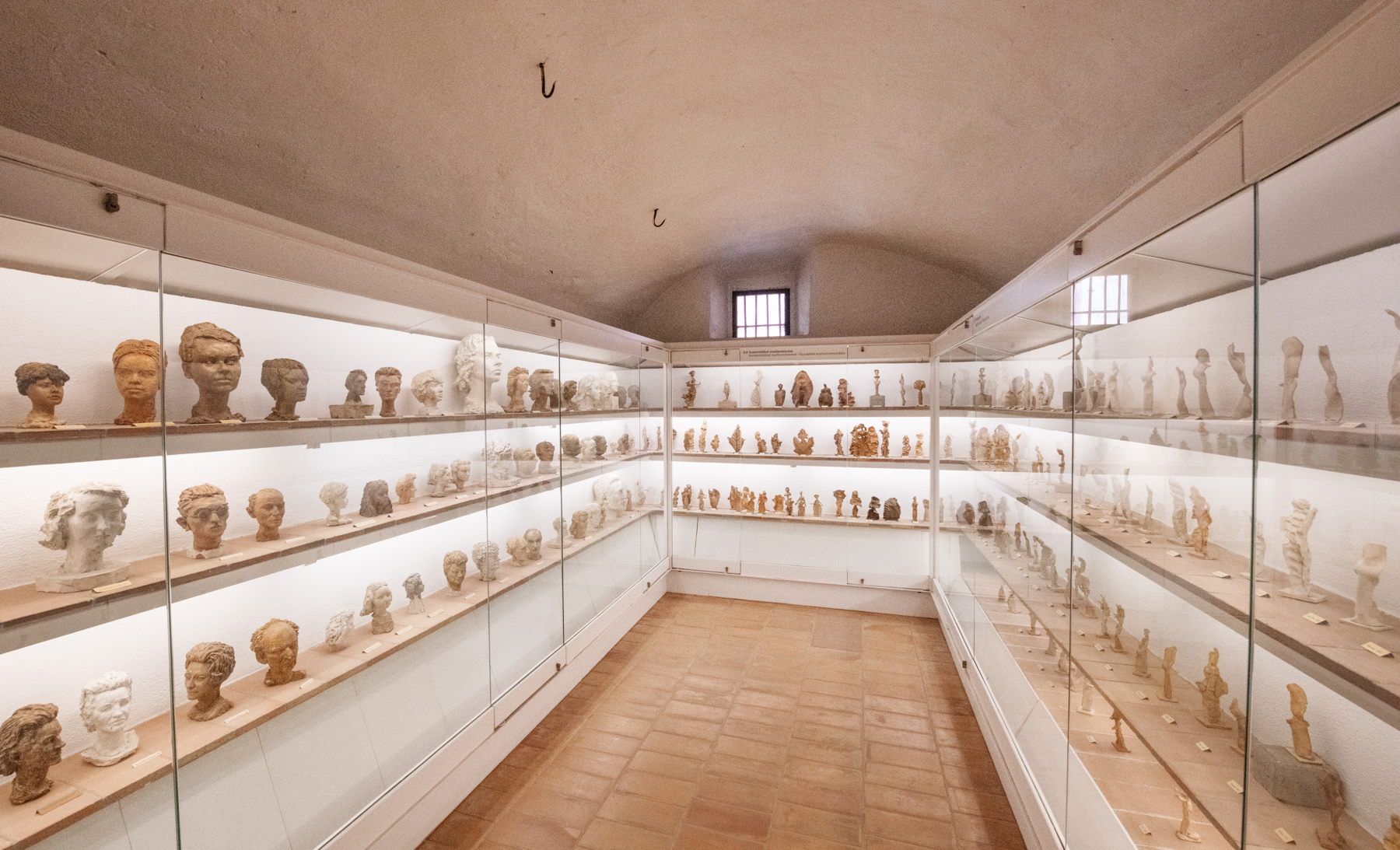
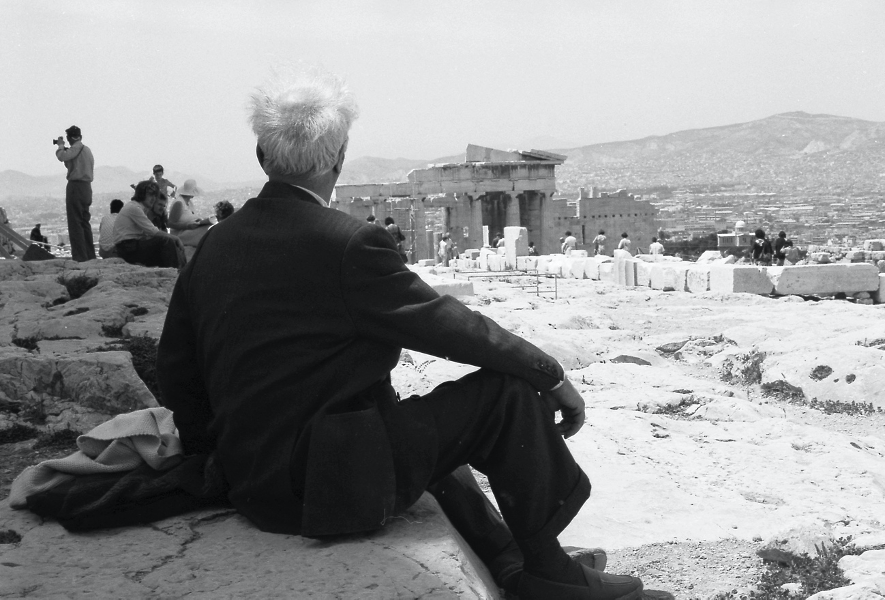
Born in Barcelona in 1899, he settled in France in 1920. After a brief stay in Toulouse, he arrived in Paris in 1921. His meeting with Picasso would prove decisive in his dedication to sculpture. He will encourage him and buy works from him, becoming his first and main collector. In 1924 he held his first exhibition in Paris, prefaced in the catalog by the poet Max Jacob, who would also write the one for the Zborowski gallery four years later.
In 1929 Fenosa returned to Barcelona to organize an individual exhibition that took place in the Sala Parés. He lived with enthusiasm the proclamation of the Republic and with intensity the development of the Civil War.
His work preserving the artistic heritage of Catalonia and Aragon in the early days of the Civil War contributed, among others, to the safeguarding of the mural paintings of the Sijena monastery in 1936.
In 1939 he decided to go into exile and settled again in France.
In 1944 the Committee of Libération du Limousin commissioned him to create a sculpture commemorating the massacre of the inhabitants of Oradour-sur-Glane, in France. Fenosa creates the Monument aux Martyrs d’Oradour-sur-Glane, installed in Limoges since 1981 and which will be moved to its final location in Oradour-sur-Glane and inaugurated in 1999.
Since 1946 Fenosa has exhibited individually or collectively in Paris, London, Barcelona, Madrid, Prague, New York, Tokyo, Osaka, Casablanca, Carrara… Great contemporary writers and poets write prefaces to their catalogues, such as Paul Éluard, Jean Cocteau, Jules Supervielle, Josep Carner, Alexandre Cirici Pellicer, Francis Ponge, Pablo Neruda, Michel Cournot, Roger Caillois or Salvador Espriu.
He made sculptures of reduced dimensions, but also of monumental measures such as the Christ for the church of Christ-Roi in Friborg (1956-57), the Polyphème in Dole (1972), the Sphinx on the pediment of the door of the Constitutional Council of Paris ( 1973), the monument to Pau Casals in Barcelona (1976-77), the relief of Saint-Georges terrassant le dragon in Paris (1977), Orlando Furioso in Madrid and Montpellier (1971-73), Le Beau Temps pourchassant la Tempête, installed in 1985 in Barcelona and in La Défense in Paris; the Ophélia bas-relief, inspired by Rimbaud, inaugurated in La Défense (1987).
In 1981, UNESCO entrusted him with the annual Peace Education Prize. Fenosa makes L’Olivier, symbol of peace. In 1982 he received the Gold Medal from the Generalitat of Catalonia, followed by the Légion d’Honneur in 1983, awarded by the French Ministry of Culture, and in 1987 the Gold Medal from the city of Barcelona.
Important retrospectives of his career took place in Madrid in 1979, at the Rodin Museum in 1980, and in Barcelona in 1983-84 at the Palacio de la Virreina and in 1999 at the Museum of Modern Art.
He dies in Paris on March 25, 1988.
BIO in PDF:
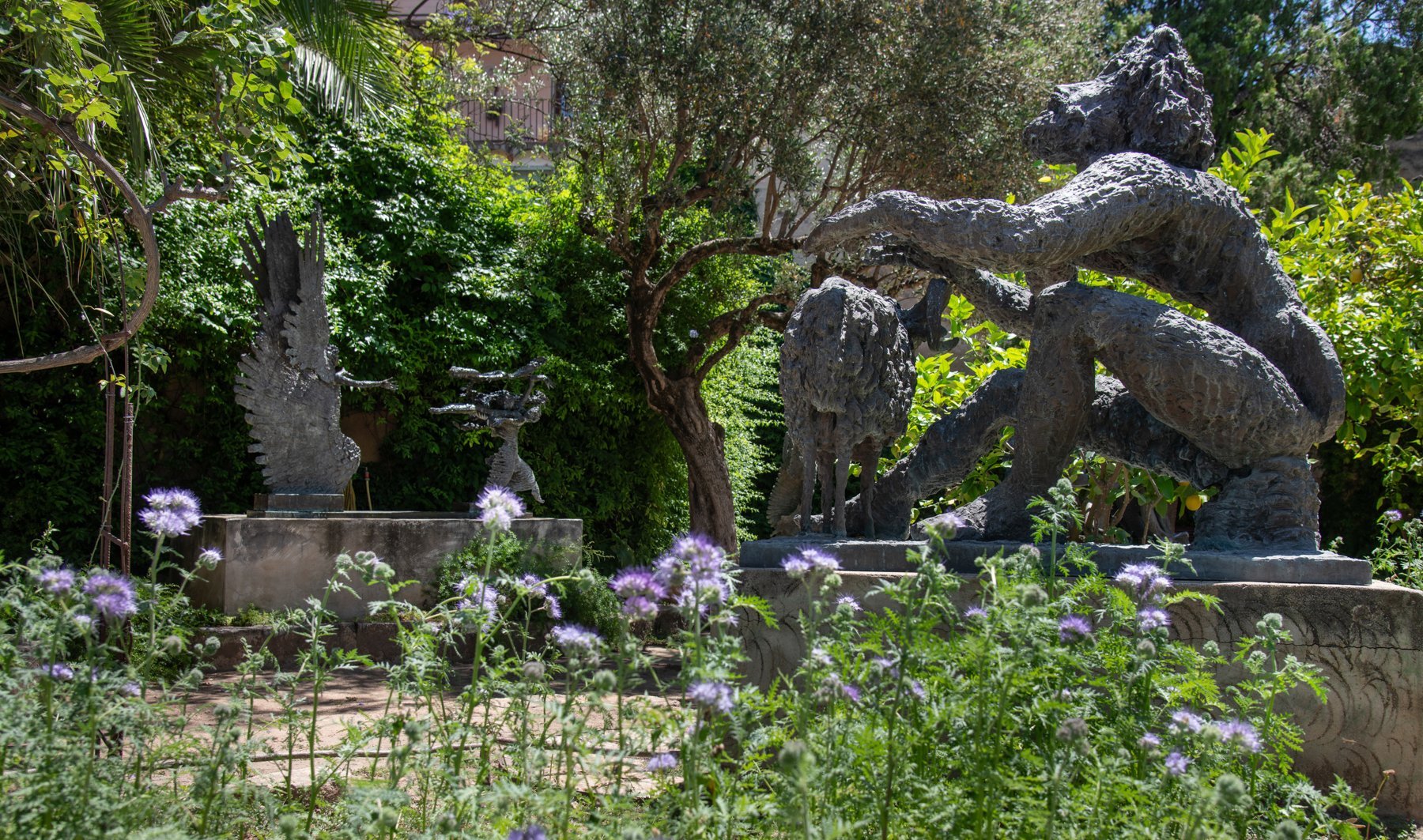
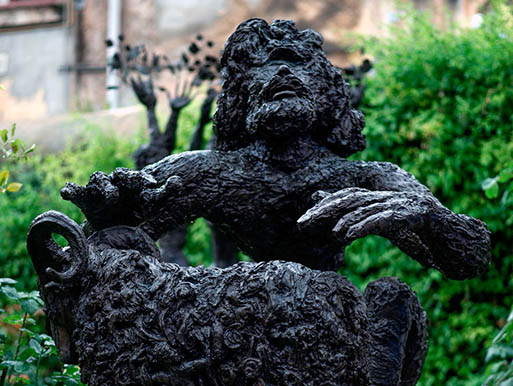
POLYPHÈME (1949)
In a decisive episode of The Odyssey, Ulysses blinds Polyphemus, bursting his only eye, because the Cyclops keeps him prisoner in the cave. Equipped with open and disproportionate hands, Polyphemus, groping, feels the sheep within whose fur Ulysses has hidden so as not to be discovered.
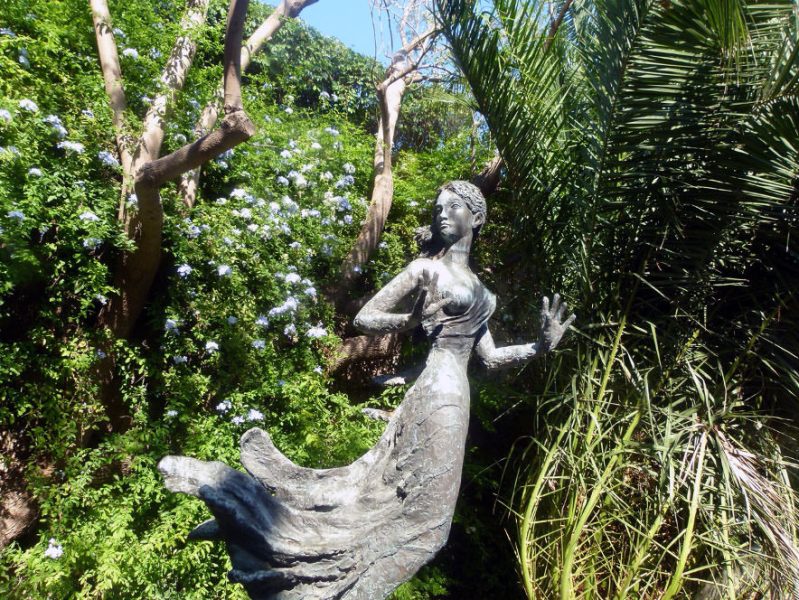
TEMPÊTE POURCHASSÉE PAR LE BEAU TEMPS (1957)
It represents a woman who advances, swirled by the winds that ruffle her hair and make her clothes fly, turning her axis towards the good weather, knowing that, sooner or later, calm will come.
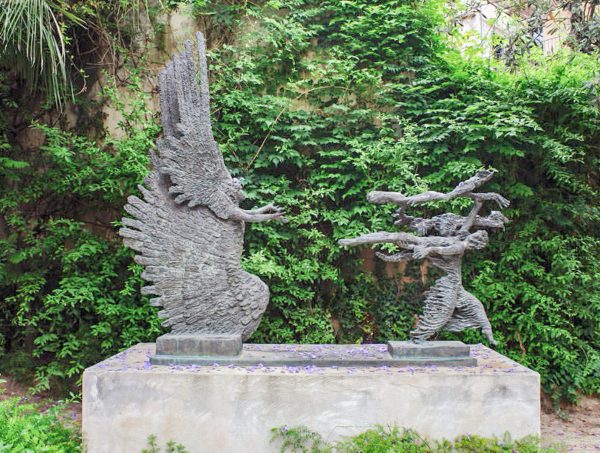
LE BEAU TEMPS POURCHASSANT LA TEMPÊTE (1978-1979)
With this monumental group Fenosa will close the cycle of “The victory of peace over war.”
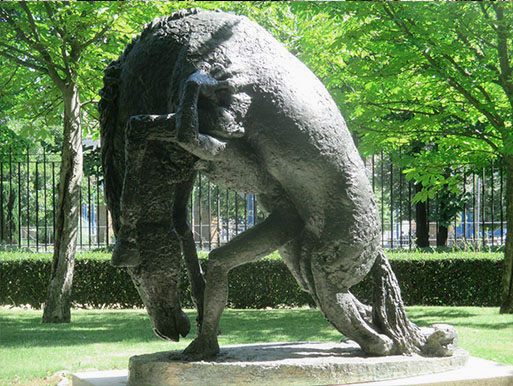
ORLANDO FURIOSO (1971-1972)
For Fenosa, a great reader of Ariosto, Orlando is "a model of love and fidelity." Orlando looks for his beloved Angelica and, mad with pain for not being reciprocated, flees across France until he reaches the Pyrenees. The horse ends up dying of fatigue and Orlando carries it on his back and follows the path with it.
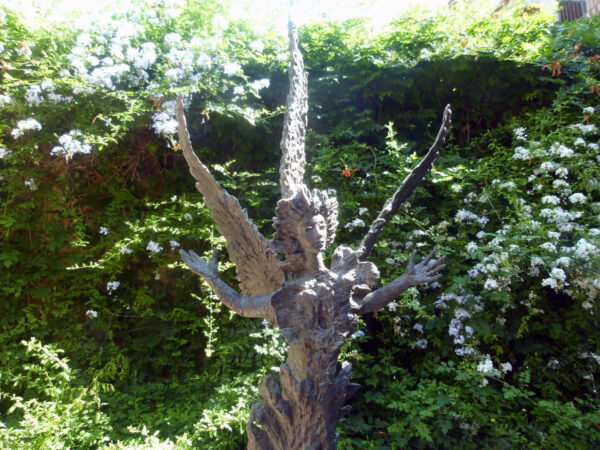
BEAU TEMPS (1978)
After the Spanish Civil War and the German occupation of France, Fenosa was concerned with representing Peace and War. She will thus create Beau Temps.
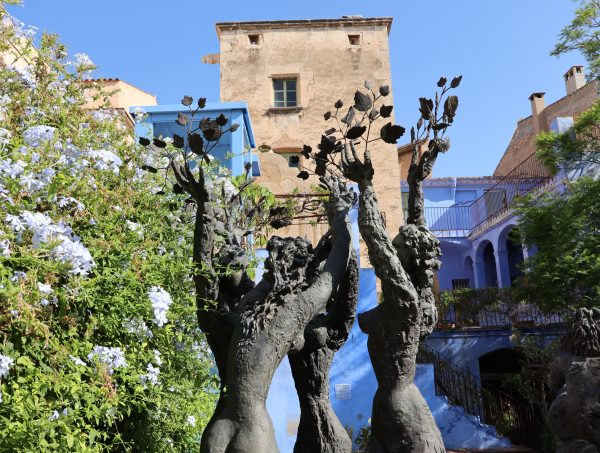
MÉTAMORPHOSE DES SOEURS DE PHAÉTON (1950)
The scene describes the moment in which Phaethon's sisters turn into trees under the gaze of their mother, who can do nothing to save them. Illustrates the passage from Ovid's Metamorphoses. Phaethon, after trying to show himself worthy of his lineage, asked Zeus to let him govern the chariot of the Sun. The experience proved careless and devastated the land. Zeus threw a lightning bolt at him that caused his death and his sisters buried him, despite Zeus's prohibition to do so. As punishment he turned them into trees.
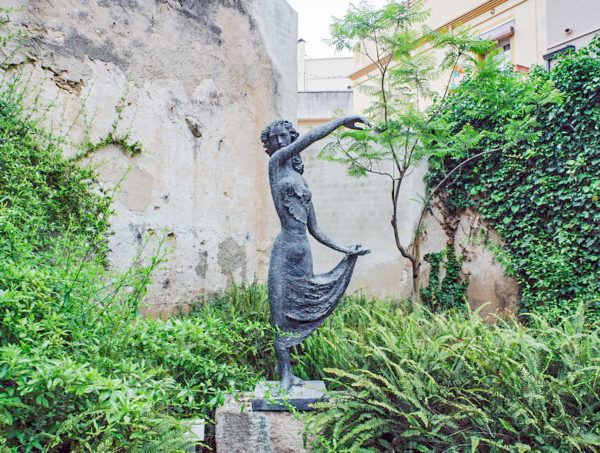
LA PREMIÈRE (1970)
In a prologue for a Fenosa exhibition, the writer Michel Cournot explains a story according to which God modeled a female figure on the last day of creation, before resting. When he retires he does not find her, he has lost her and makes another one of her, Eva, until thousands of years later he finds her again in the Fenosa workshop, where the title of “The First” comes from.
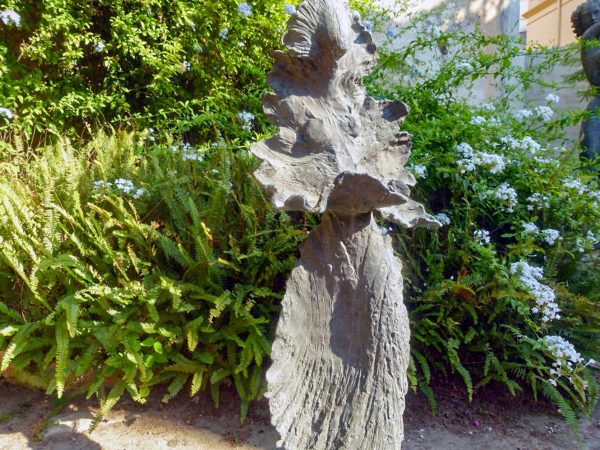
PRIMAVERA (1973)
This sculpture belongs to Fenosa's cycle of metamorphic works, oscillating between woman and vegetation.
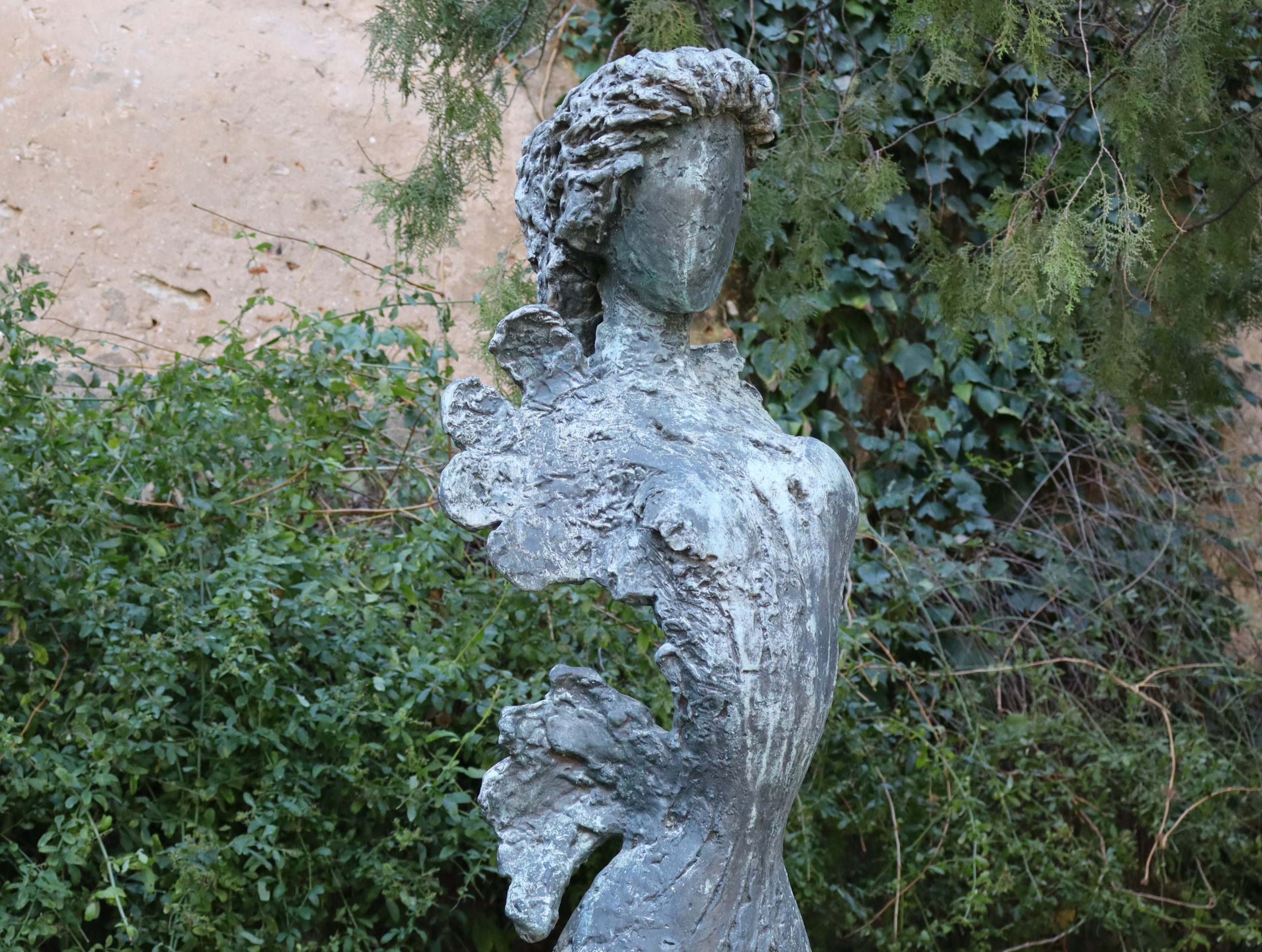
AGATHE (1976)
The work is inspired by Baudelaire's verses “Moesta et Errabunda” and is related to a previous work: Grande volute (1970)